
Cancer is a disease that develops when cells in the body grow and divide uncontrollably. While cancer can affect almost any part of the body, bone cancer is a relatively rare but serious form that requires early recognition and timely treatment.
The good news is that many cancers, including bone cancer, are treatable and potentially curable when detected early. Awareness plays a key role in improving outcomes.
What Is Bone Cancer?
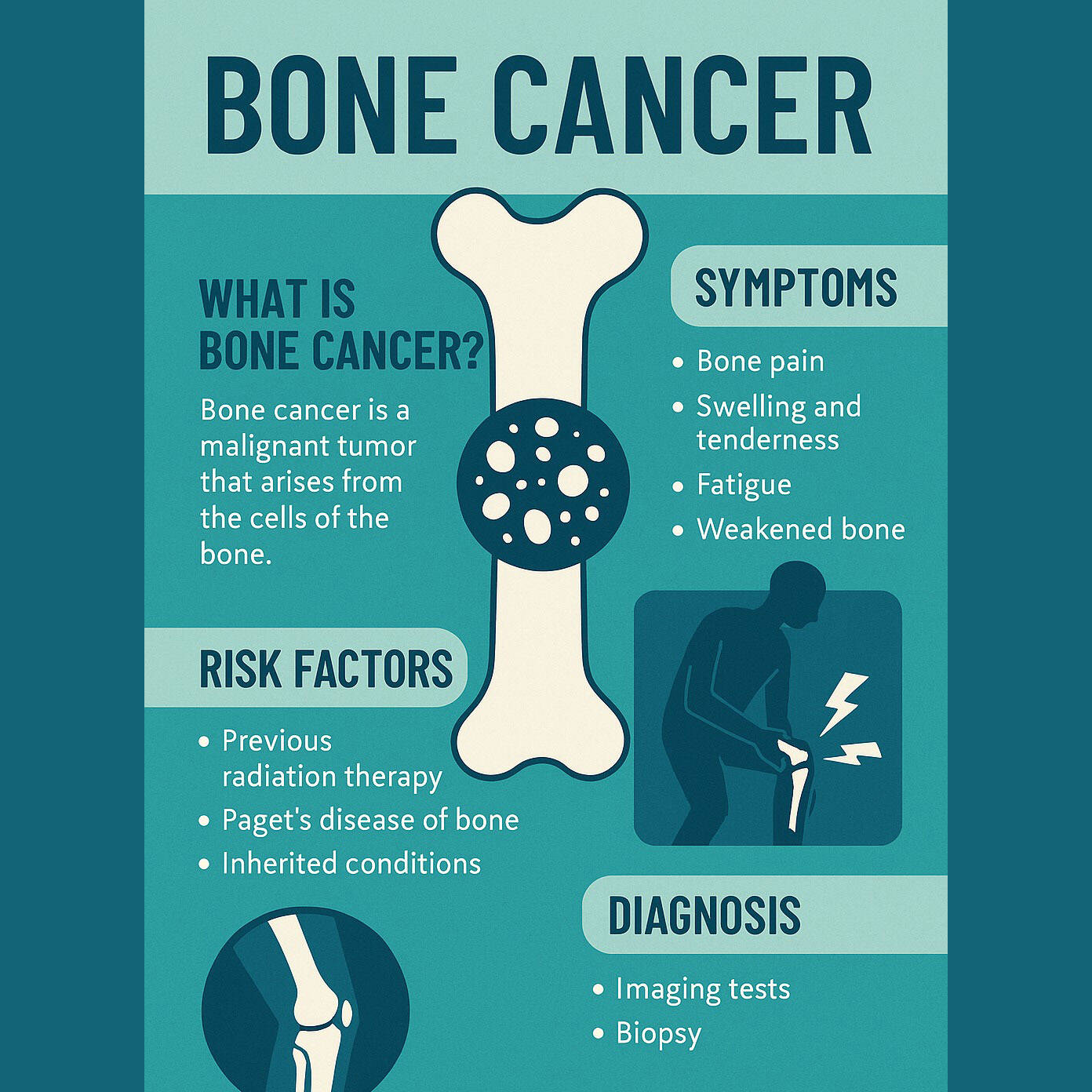
Bone cancer is a type of cancer that originates in the bone cells themselves. It is important to distinguish this from cancers that start in other organs (such as breast, lung, or prostate) and later spread to the bones—those are called secondary or metastatic bone cancers.
Primary bone cancer can develop in any bone, but it most commonly affects:
The pelvis
Long bones of the arms and legs
Although some bone cancers occur in children and adolescents, most cases are seen in adults.
Common Types of Bone Cancer
The most frequently diagnosed types of primary bone cancer include:
- Osteosarcoma – most common in children and young adults
- Chondrosarcoma – usually affects adults and develops from cartilage cells
- Ewing Sarcoma – more common in children and teenagers
Each type behaves differently and requires a tailored treatment approach.
Warning Signs and Symptoms of Bone Cancer
Bone cancer may initially present with subtle symptoms, which can be easily overlooked. Common warning signs include:
- Persistent bone pain, often worse at night or with activity
- Swelling or tenderness near the affected area
- Weakening of the bone, sometimes leading to fractures with minimal injury
- Fatigue and general weakness
- Unexplained weight loss
⚠️ Any bone pain that is persistent, worsening, or unexplained should be evaluated by a doctor.
Risk Factors for Bone Cancer
While the exact cause of bone cancer is not always known, certain factors increase the risk:
1. Inherited Genetic Conditions
Some rare genetic syndromes passed down in families can increase the risk of bone cancer, such as:
Li-Fraumeni syndrome
Hereditary retinoblastoma
2. Paget’s Disease of Bone
Paget’s disease, a condition commonly seen in older adults, causes abnormal bone remodeling and increases the risk of developing bone cancer later in life.
3. Previous Radiation Therapy
Radiation therapy—especially when given during childhood—can increase the risk of bone cancer many years later.
How Is Bone Cancer Diagnosed?
Accurate diagnosis involves a combination of imaging and laboratory tests, including:
- X-ray
- Bone scan
- CT scan
- MRI
- PET scan
- Surgical biopsy (to confirm cancer type)
Early and precise diagnosis helps in planning the most effective treatment strategy.
Treatment Options for Bone Cancer
Treatment depends on the type, stage, location of the cancer, and the patient’s overall health. Common treatment approaches include:
- Surgery – the primary treatment for most bone cancers
- Chemotherapy – to destroy cancer cells or shrink tumors
- Radiation therapy – used in selected cases
Many patients require a combination of treatments for best outcomes.
Can Bone Cancer Be Prevented?
While not all cases can be prevented, adopting a healthy lifestyle can significantly reduce cancer risk and improve overall bone health.
1. Quit Smoking
Smoking damages bone health and increases the risk of several cancers, including bone and blood cancers. Avoiding tobacco is one of the most effective preventive steps.
2. Maintain a Healthy Diet
A balanced diet rich in:
Fresh fruits and vegetables
Whole grains
Adequate protein
helps maintain healthy bones and body weight. Limiting processed foods and packaged meats is strongly advised.
3. Limit Alcohol Consumption
Excessive alcohol intake weakens bones and increases cancer risk. Moderation is key.
4. Exercise Regularly
Regular physical activity strengthens bones, improves blood circulation, and reduces cancer risk.
5. Get Regular Health Check-ups
Early detection through timely screening is one of the most powerful tools in controlling cancer. Detecting cancer early prevents progression and spread.
Key Takeaway
Bone cancer, like many other cancers, can often be managed effectively when detected early. Awareness of symptoms, understanding risk factors, and making healthy lifestyle choices can make a significant difference.
If you or a loved one experiences persistent bone pain, swelling, or unexplained symptoms, do not ignore them. Seek expert medical evaluation at the earliest.
Early Attention Saves Lives
Bone pain should never be dismissed as “just strain” when it persists.
If you notice warning signs or have concerns about bone health, consult an oncologist for proper evaluation and guidance.
Early diagnosis not only improves survival—but also quality of life.
📞 Call / WhatsApp: +91 81234 43036
🌐 Website: drvishalkulkarni.com